

Welcome to the website for the Seward Highway
|
|
|
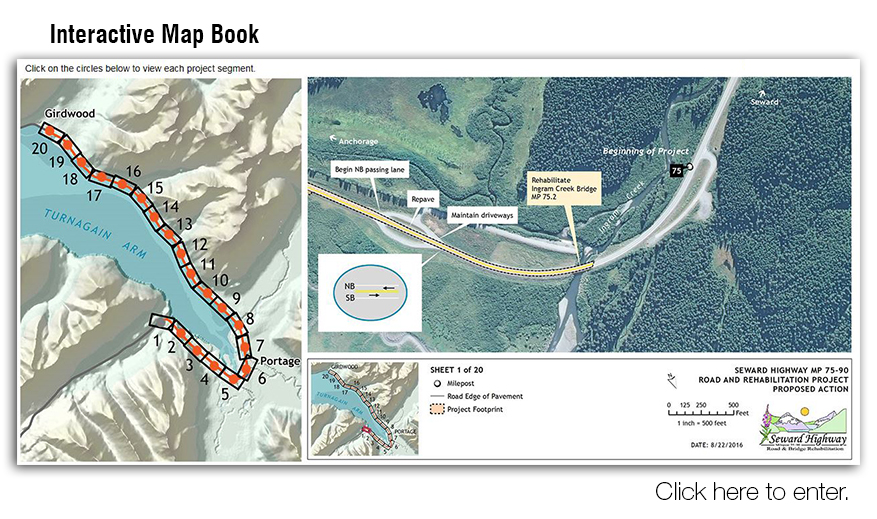
The Alaska Department of Transportation and Public Facilities (DOT&PF), in cooperation with the Federal Highway Administration (FHWA), is rehabilitating approximately 15 miles of the Seward Highway between milepost (MP) 75 near the bottom of Turnagain Pass, and MP 90 near the Girdwood intersection. This project will increase safety, extend the service life of the roadway, replace eight bridges, and repair another bridge (nine bridges in total). Currently, there are no passing lanes along this 15-mile stretch of the highway; both residents and tourists experience heavy congestion, particularly during the peak summer period. This project includes upgrading the highway by rehabilitating the road, straightening curves in high-accident locations, improving intersections, and allowing for more passing opportunities with the addition of more passing lanes. Project construction has been divided into two phases, with each phase taking approximately two years to complete construction. To view the project corridors, visit our interactive map book.
Phase 1
Phase 2
The project area includes the Portage Glacier Road intersection, the Twenty Mile River boat launch area, and the Alaska Railroad Portage Station. As the only land connecting Whittier to communities on the Kenai Peninsula, this portion of the highway receives heavy passenger vehicle, commercial truck, and seasonal tourism industry traffic. |
|
|
|
|
|
|
Read more about the project:Click on the link provided in to learn more about the Portage Curve Multimodal Connector. |
Project Area MapThe map above represents the proposed actions to rehabilitate the highway including proposed roadway, drainage (culverts), parking, driveway/access, and recreational improvements. Click on the image or select the Interactive Map tab at the top of our page to view each section. |



Project Information
Quick Links

The Seward Highway corridor between mileposts 75 and 90 represents a vital link through the mountainous terrain of south-central Alaska, connecting communities and supporting both local travel and regional commerce. The surrounding landscape features glacial valleys, dense forests, and scenic waterways that have long made this stretch a popular route for residents and visitors alike. Maintaining safe and reliable roadway conditions in this environment requires ongoing attention to the unique challenges posed by weather, geology, and seasonal traffic patterns that characterize the region.
Rehabilitation projects along this corridor focus on extending the service life of the pavement while improving overall roadway performance. Over time, harsh winters, heavy rainfall, and the natural settling of mountain soils contribute to cracking, rutting, and surface wear. Addressing these issues typically involves resurfacing the road, repairing subsurface damage, and upgrading drainage features that help protect the highway from runoff and meltwater. Together, these efforts support smoother travel and reduce the need for frequent emergency repairs.
Bridge work is a central component of any major highway rehabilitation in this area. Many of the existing structures along the corridor were built decades ago and now require replacement or significant repair to meet modern standards. Upgrading bridges allows for wider lanes, improved shoulders, and updated safety features that benefit all travelers, including those operating commercial vehicles, passenger cars, bicycles, and pedestrians where pathways exist. New bridge designs also account for seismic activity and long-term durability in a demanding climate.
Safety improvements are a key driver of the project, particularly along a segment that currently lacks passing lanes. Adding opportunities to pass slower vehicles can help reduce driver frustration and lower the risk of collisions caused by impatient or distracted motorists. Curve realignment, intersection enhancements, and updated signage further contribute to a safer driving environment. Pedestrian and bicycle accommodations are also considered where feasible, recognizing the corridor’s role as a recreational route.
Public involvement plays an important role throughout the planning and construction phases of large transportation projects. Agencies typically share updates through websites, social media channels, public meetings, and printed materials to keep residents, businesses, and travelers informed. Opportunities for community feedback help shape design decisions, construction scheduling, and detour planning. Transparent communication ensures that those who rely on the highway for daily commutes, tourism, or freight movement understand what to expect during each stage of the work.
Environmental considerations are carefully integrated into rehabilitation efforts in sensitive regions. Construction activities near streams, wetlands, and wildlife habitats require planning to minimize disturbance and protect natural resources. Erosion control measures, stormwater management, and seasonal work restrictions are common practices that reflect the commitment to balancing infrastructure needs with environmental stewardship. Coordination with regulatory agencies and local stakeholders helps ensure that improvements support long-term ecological health alongside transportation goals.
Coordination between state departments, federal partners, and local agencies is essential for delivering complex highway projects. The Alaska Department of Transportation and Public Facilities often collaborates with the Federal Highway Administration, municipalities, and tribal entities to align funding, design standards, and construction timelines. This cooperative approach helps leverage available resources and ensures that improvements meet both regional and national expectations for safety, quality, and resilience in challenging northern environments.
Traveler information resources support the public during periods of construction. Road condition reports, construction notices, and weather updates help drivers plan trips and anticipate delays along the corridor. Travelers are generally encouraged to allow extra time, follow posted signage, and check official sources before departing. Maintaining access for residents, emergency services, and commercial vehicles remains a priority throughout each phase of work, helping to minimize disruption to the surrounding communities.
Long-term maintenance planning is an important outcome of major rehabilitation projects. By investing in durable materials, modern bridge designs, and improved roadway geometry, agencies aim to reduce the frequency and cost of future repairs. Routine inspections, seasonal maintenance, and timely responses to weather-related damage all contribute to preserving the corridor’s condition. The goal is a highway that continues to serve the traveling public safely and efficiently for many years after construction is complete.
Community connections extend well beyond the roadway itself. The Seward Highway serves as a gateway to recreation areas, trailheads, and scenic destinations that draw visitors throughout the year. Improvements to the corridor support tourism, local economies, and the quality of life for residents who call the region home. By enhancing safety, reliability, and accessibility, the project reflects a broader commitment to maintaining the transportation networks that link people, places, and opportunities across south-central Alaska.