

Schedule

|
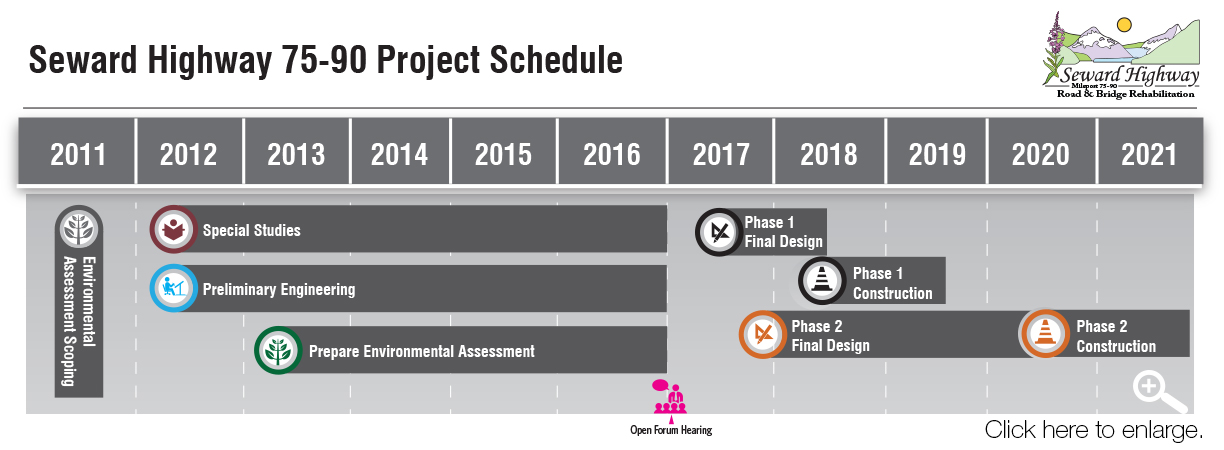
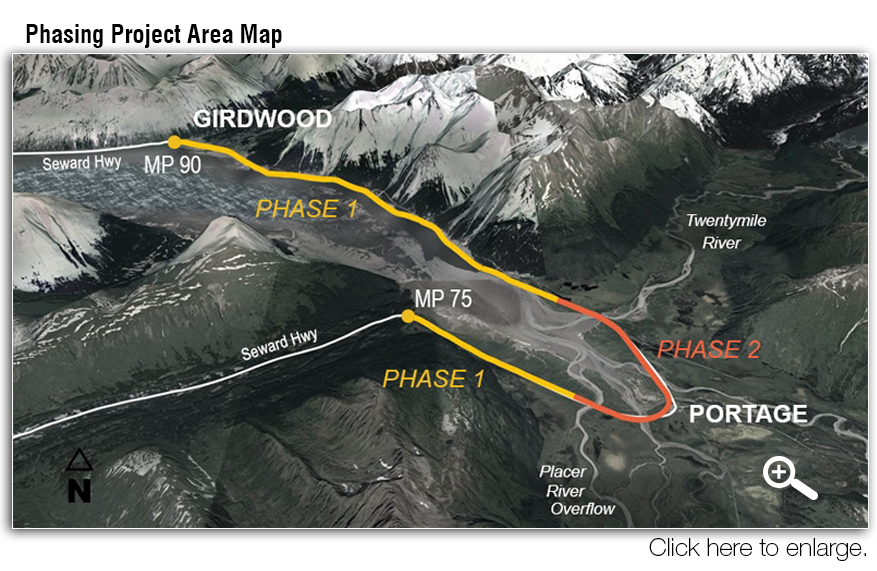
The project is proposed to be constructed in two phases. The first phase of project construction will rehabilitate MP 75 to 77.7 and MP 81 to 90, and is anticipated to begin in 2018. Phase 2 will construct MP 77.7 to 81 and is anticipated to begin in 2020. Each phase is anticipated to take approximately two years to construct.
Dates are projected and subject to change, based on availability of funding and other factors.
|
|
|
|

|
Construction phasing
The project is proposed to be constructed in two phases. The first phase of project construction will rehabilitate MP 75 to 77.7 (Placer River Overflow), and MP 81 to 90, and is anticipated to begin in 2018. Phase 2 will construct MP 77.7 to 81 and is anticipated to begin in 2020. Each phase is anticipated to take approximately two years to construct. Dates are projected and subject to change, based on availability of funding and other factors. As Phase One includes two sections of roadway on either side of the Phase Two area, the entire 15-mile project corridor will be impacted by seasonal construction once Phase One has begun. |
Project Information
Quick Links

Highway rehabilitation projects in Alaska are typically organized into carefully sequenced phases that allow construction crews to address aging pavement, deteriorating bridges, and outdated roadway geometry in manageable segments. By dividing a long corridor into smaller milepost ranges, departments of transportation can stage equipment efficiently and minimize disruption to travelers, commercial vehicles, and local businesses. Each phase generally includes its own design review, environmental considerations, and construction schedule, which helps keep the overall program on track even when weather or funding introduces unexpected delays.
Construction phasing along a rural highway corridor often reflects both engineering priorities and regional traffic patterns. Segments with the most advanced pavement deterioration or safety concerns, such as tight curves, narrow lanes, or aging culverts, are usually addressed first. Passing lane additions, intersection improvements, and bridge rehabilitation work are commonly bundled within a single phase to take advantage of mobilized crews and established traffic management plans. This approach reduces repeated closures and helps maintain access to nearby communities throughout the multi-year effort.
Schedules for large-scale roadway projects in colder regions are heavily influenced by seasonal weather windows. In Alaska, the practical construction season is relatively short, so project planners typically aim to complete earthwork, paving, and structural work during the warmer months. Winter months are often reserved for design refinements, materials procurement, and preliminary work that does not require favorable ground conditions. This rhythm shapes realistic start and end dates and explains why multi-year projects frequently extend across several construction seasons.
Public involvement remains an important companion to any phased highway improvement program. State transportation agencies typically share proposed project information through interactive maps, fact sheets, and public meetings so that residents, commercial drivers, and visitors can plan ahead. Travelers are usually encouraged to monitor official notices for changes that may affect commute times, freight routes, or access to roadside amenities. Clear communication about which milepost segments are under construction helps reduce confusion and supports safer decision-making on the road.
Bridge and pavement rehabilitation along scenic byways often requires balancing modern design needs with respect for the surrounding landscape. Roadway realignment to soften sharp turns, adding shoulders for safety, and upgrading drainage are common elements within each construction phase. Because corridors like this serve both local residents and long-distance travelers, projects are generally scoped to improve durability and safety while preserving the character that makes the route distinctive. Long-term maintenance planning helps ensure that the investments made today continue to serve the traveling public for decades.